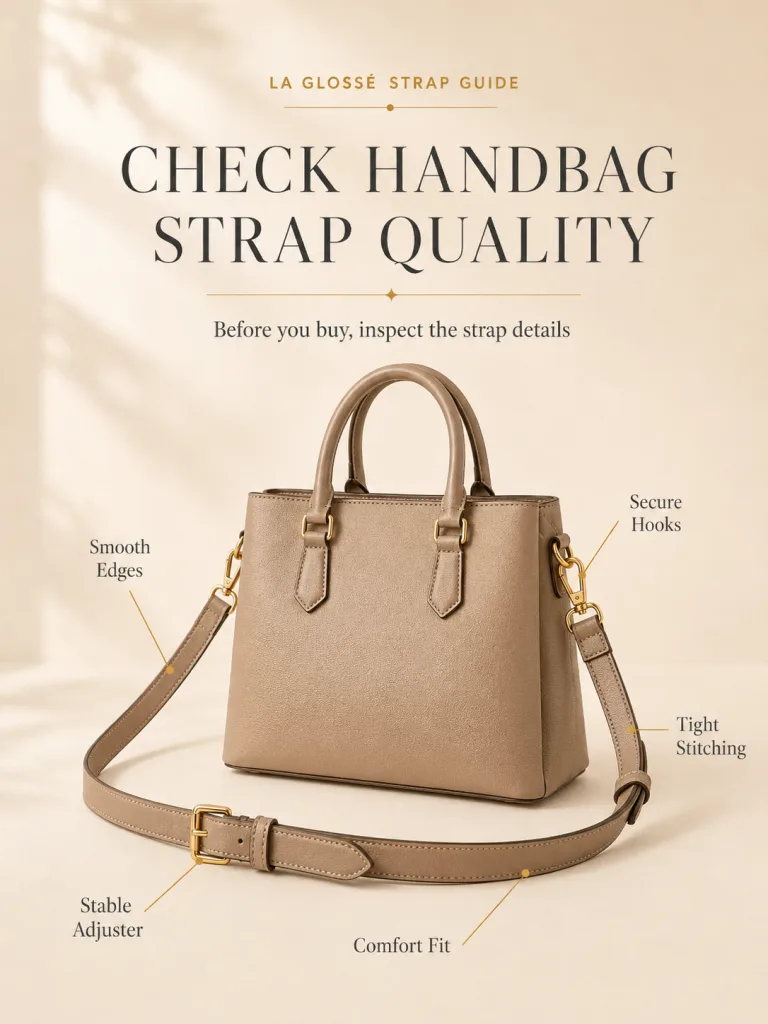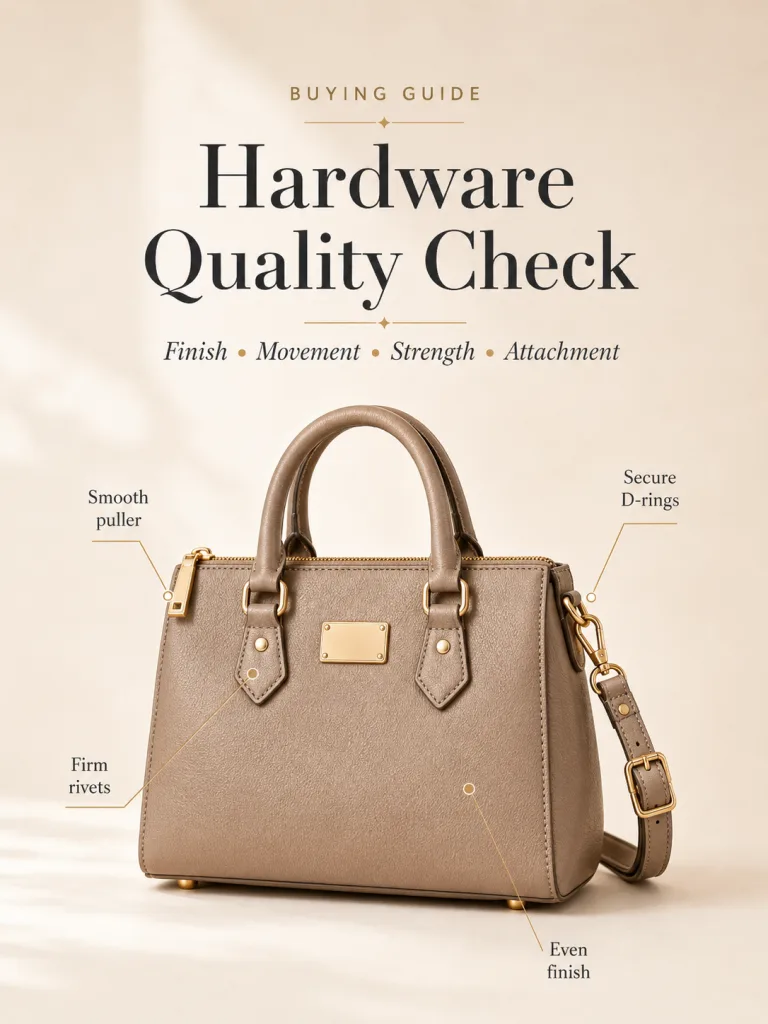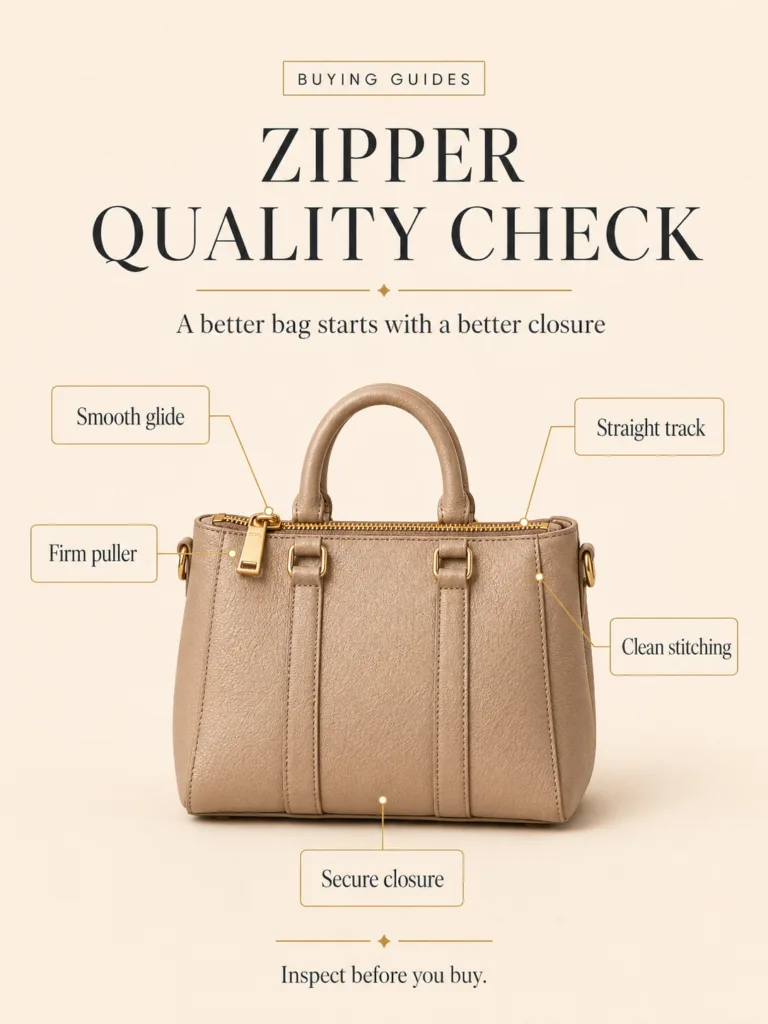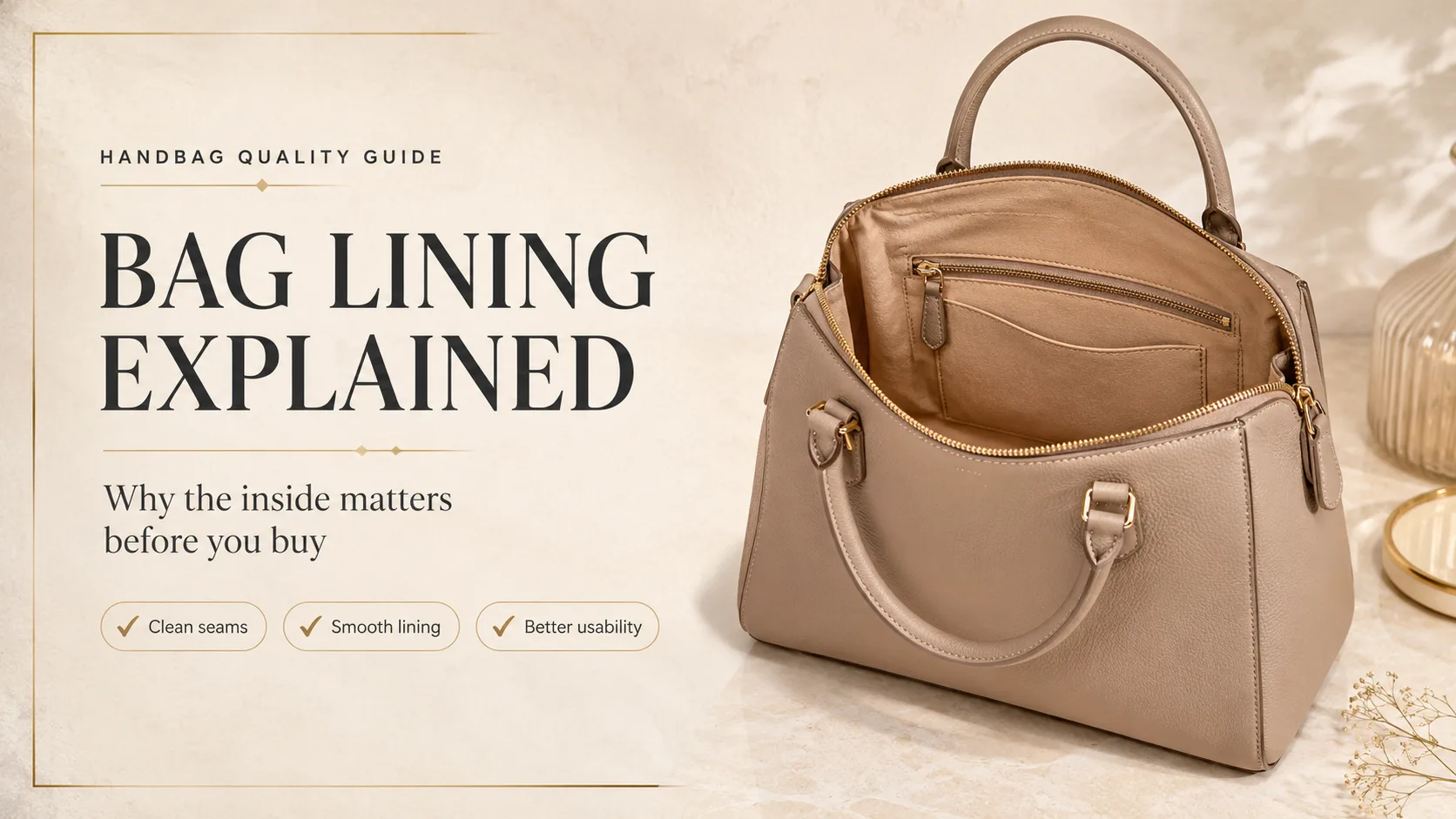
Bag Lining Explained: Why the Inside of a Ladies’ Bag Matters More Than You Think
A beautiful handbag should not only look polished from the outside. The inside matters too. Lining affects how a bag feels, how easy it is to use, how clean it stays, and how honestly the bag has been finished.
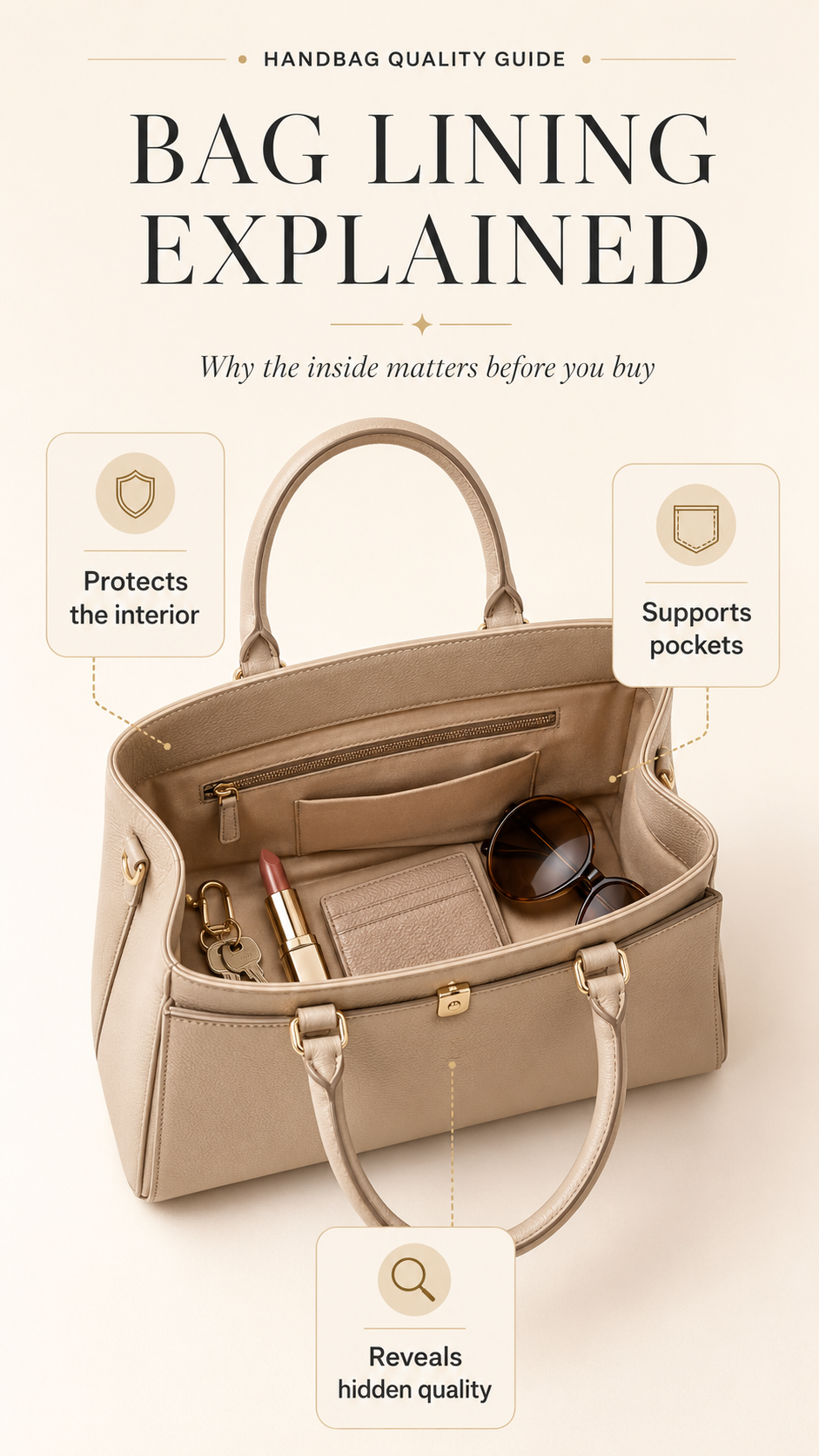
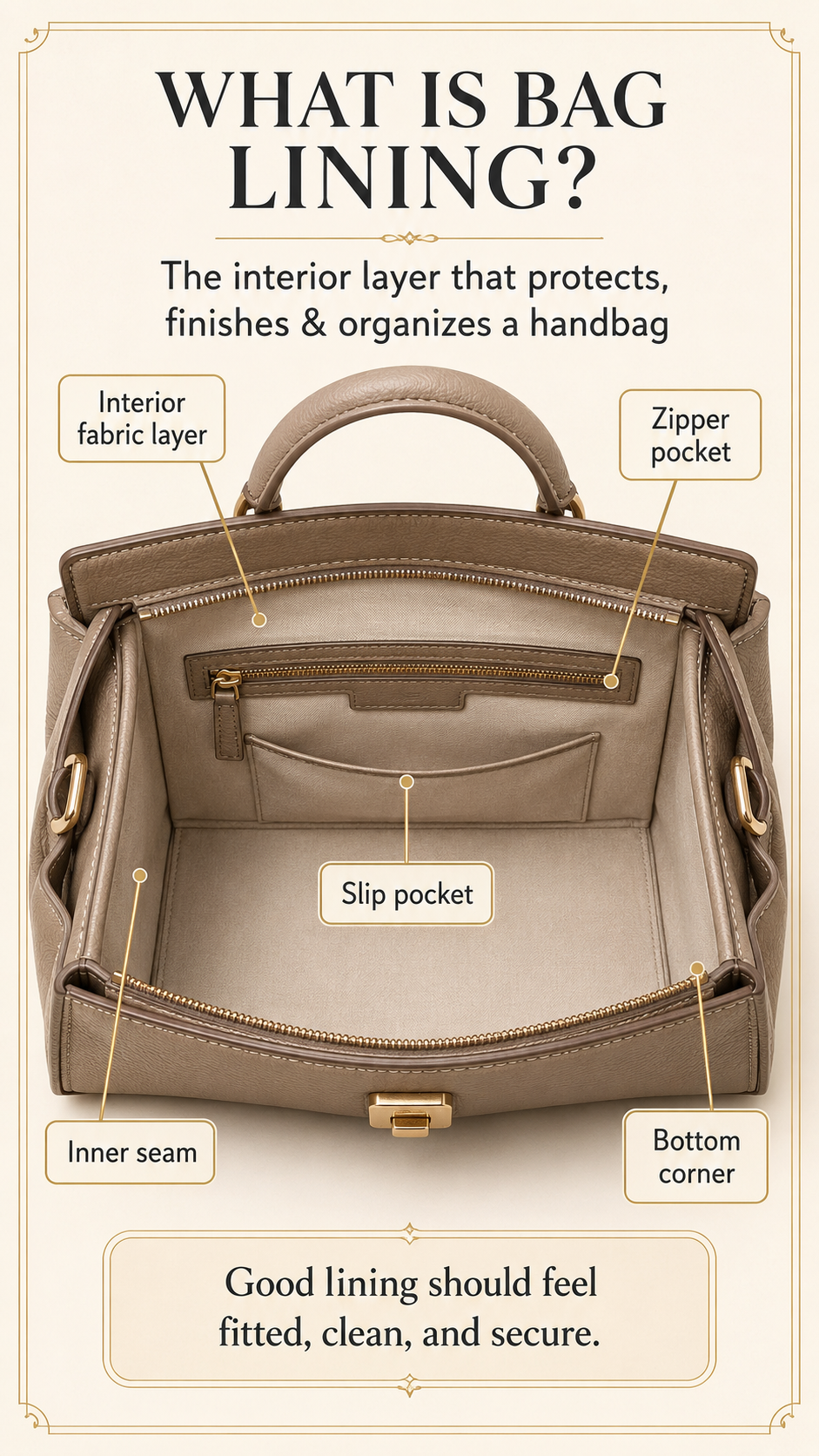
What Is Bag Lining?
Bag lining is the interior layer of fabric, leather, suede-like material, or synthetic textile sewn inside a handbag. It covers the inner side of the outer shell and creates a cleaner, more usable interior. In a well-made bag, the lining also helps support internal pockets, zipper sections, divider sleeves, and hidden reinforcement areas.
Leathercraft sources describe lining as more than decoration. It can protect the contents of the bag, help hide reinforcements, support internal pockets, and influence how the bag feels in daily use. That is why a careful shopper should inspect the inside of a bag, not only the exterior finish.
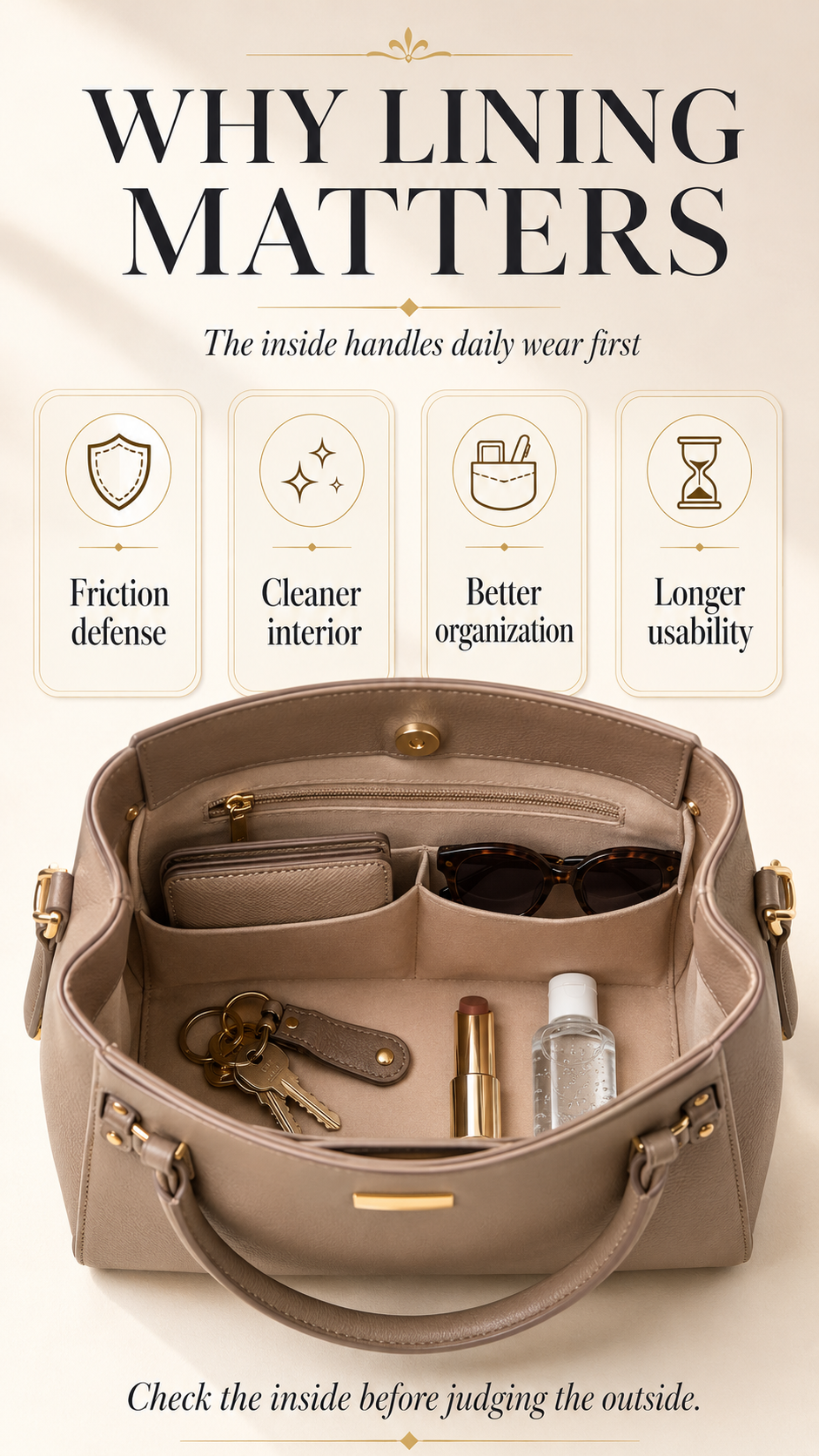
Why Ladies’ Bag Lining Matters
For many shoppers, lining is not the first thing they notice. The exterior color, hardware, silhouette, and brand name usually get the attention. But the lining is where everyday use happens. Keys, makeup, receipts, wallets, sunglasses, chargers, and small accessories constantly rub against the inside of the bag.
A durable lining gives these items a smoother surface to move against. It also helps keep the interior easier to clean. This matters especially for daily-use bags such as work totes, structured satchels, backpacks, travel crossbodies, and medium shoulder bags.
Why Lining Is a Trust Signal
A handbag can look attractive in product photos while still being poorly finished inside. Lining is a trust signal because it is one of the hidden areas where manufacturers can either invest in better construction or quietly cut costs.
If the interior stitching is uneven, the pocket edges are raw, the lining is very thin, or the fabric pools heavily at the bottom, it suggests the bag may not have been carefully finished. Authentication and resale guidance often points shoppers toward details like stitching, hardware, logos, stamps, and interior finishing because luxury quality is usually visible in small construction details, not only in the exterior design.
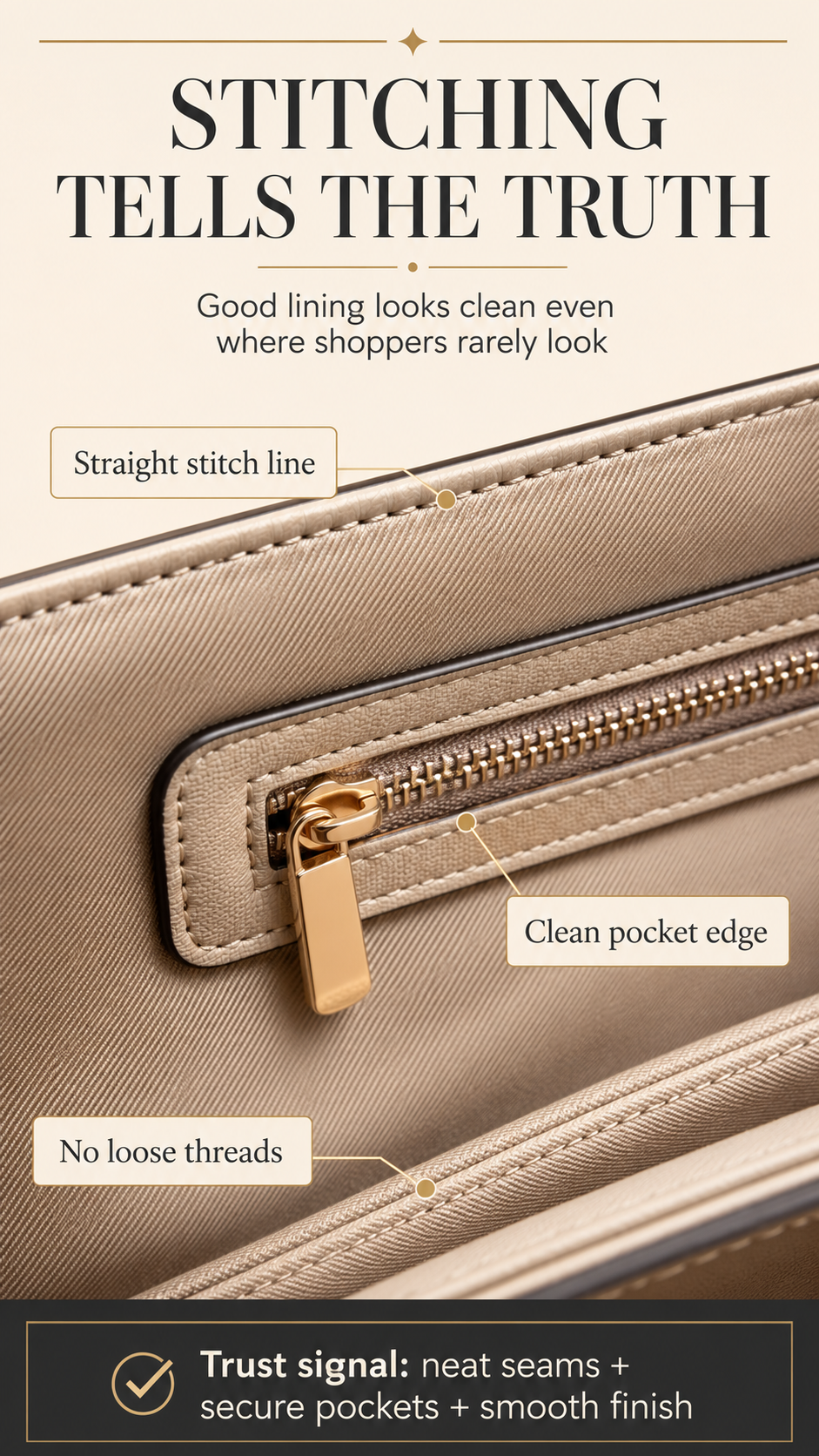
- Interior seams should look neat and secure.
- Pocket openings should not look stretched or unfinished.
- The lining should not feel like a loose plastic bag inside the shell.
- Hardware areas should not feel sharp through the lining.
- The interior should match the bag’s purpose and price level.
- Online listings should ideally show clear interior photos.
Common Bag Lining Materials
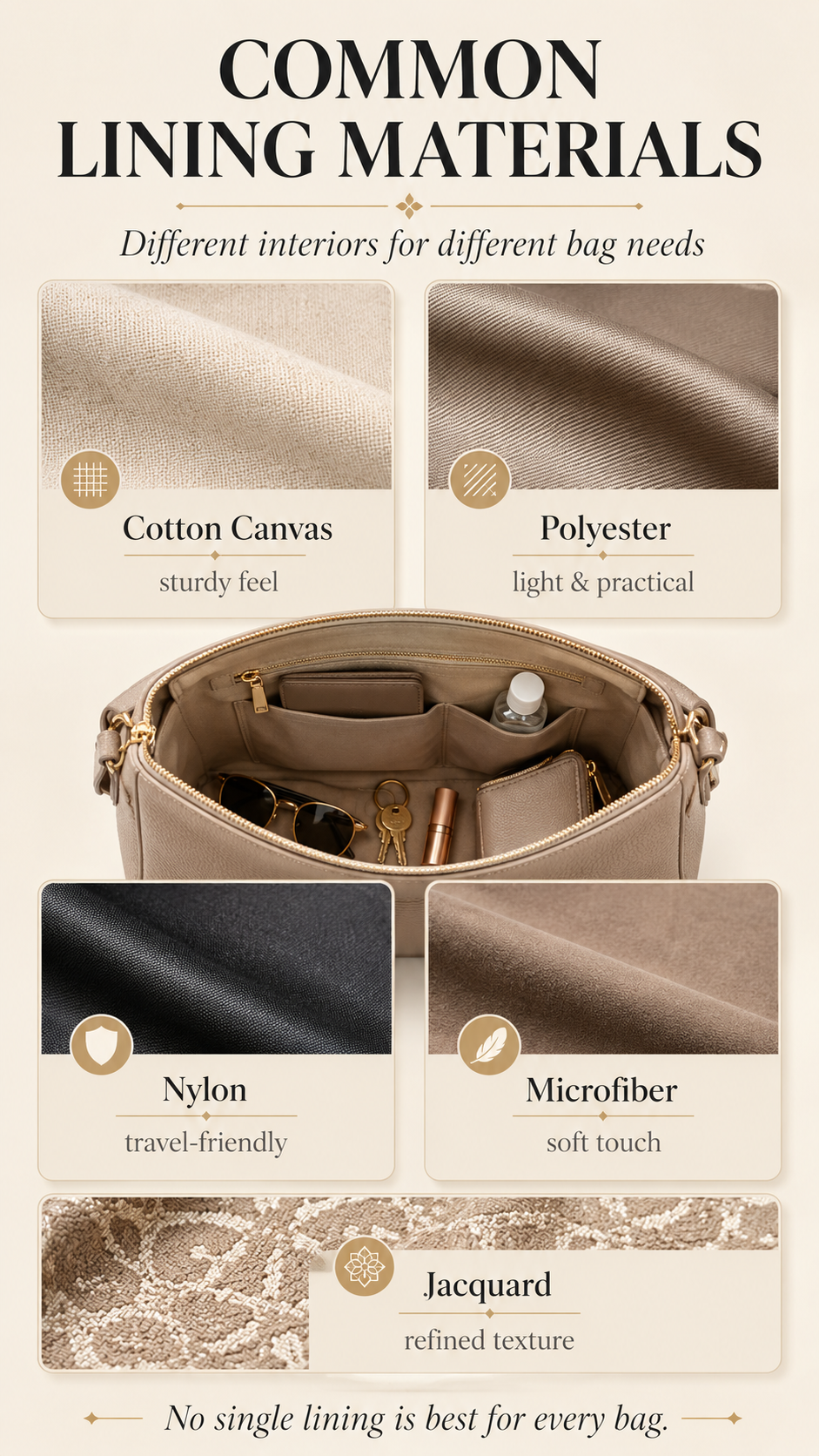
No single lining material is perfect for every handbag. A structured work tote may need a stronger, more supportive interior, while a dressy evening bag may use a softer, more refined lining. Fabric suppliers commonly discuss cotton, canvas, polyester, nylon, and premium materials as practical lining options, with different strengths depending on use.
| Material | Good For | Strengths | Watch Out For |
|---|---|---|---|
| Cotton / Cotton Twill | Casual handbags, handmade bags, lighter everyday purses | Soft feel, breathable, available in many colors and prints | Can stain more easily and may need reinforcement if thin |
| Cotton Duck Canvas | Totes, satchels, utility bags | Durable, structured, sturdy for daily carry | Can add weight and may collect lint or stains |
| Polyester | Commercial handbags, makeup bags, budget-to-midrange purses | Lightweight, wrinkle-resistant, easy to wipe in many cases | Low-grade versions can feel thin, noisy, or plasticky |
| Nylon / Ripstop Nylon | Travel bags, backpacks, sporty crossbodies | Strong, lightweight, often used where water resistance matters | May feel too technical for a refined fashion handbag |
| Leather / Suede | Luxury handbags, clutches, premium leather goods | Luxurious feel, refined interior, can age beautifully | Adds cost, weight, and usually needs more careful cleaning |
| Jacquard / Grosgrain | Designer-style shoulder bags and fashion handbags | Elegant texture, can add a premium visual detail | Can snag if the weave is delicate or if sharp items are carried loose |
Lining Thickness: What Everyday Shoppers Should Know
Lining thickness matters because both extremes can create problems. A very thin lining may show bumps from hardware or reinforcements and may wear faster in high-stress areas. A lining that is too thick can add bulk, weight, and stiff corners.
Leathercraft guidance notes that overly thick leather linings can make construction difficult and create bulky edges, while very thin linings can stretch or tear in stress areas. For many leather bag projects, an experienced leathercraft source describes roughly 0.8mm to 1.2mm as a practical “ideal” range for leather linings, while thinner linings may need to be fully bonded to stronger material for durability.
Simple Shopper Rule
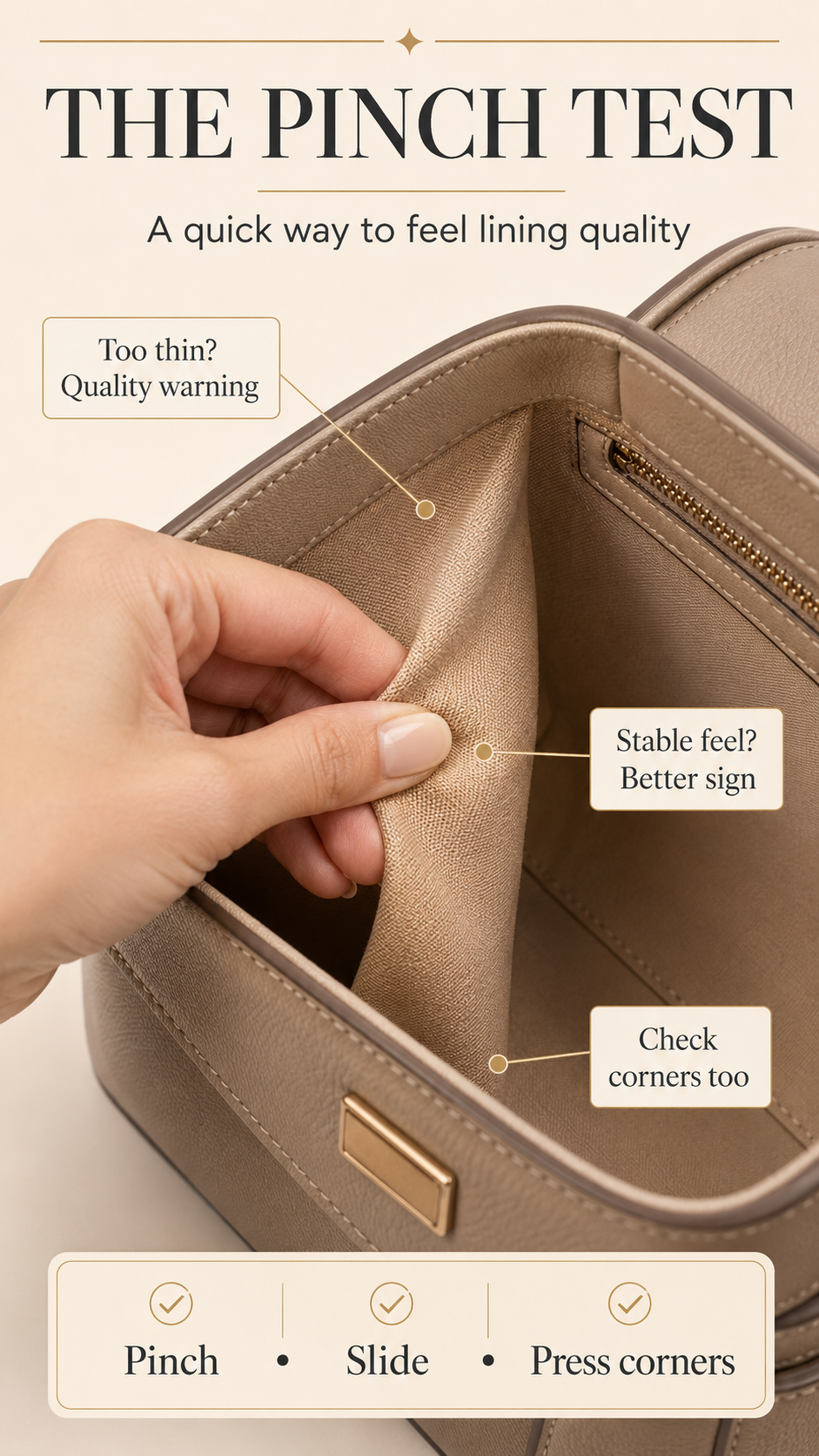
You do not need a measuring tool. Pinch the lining gently. It should feel stable, smooth, and appropriate for the bag. If it feels like tissue paper, crinkles loudly, or shows every hardware bump underneath, treat it as a quality warning.
How Good Bag Lining Should Look
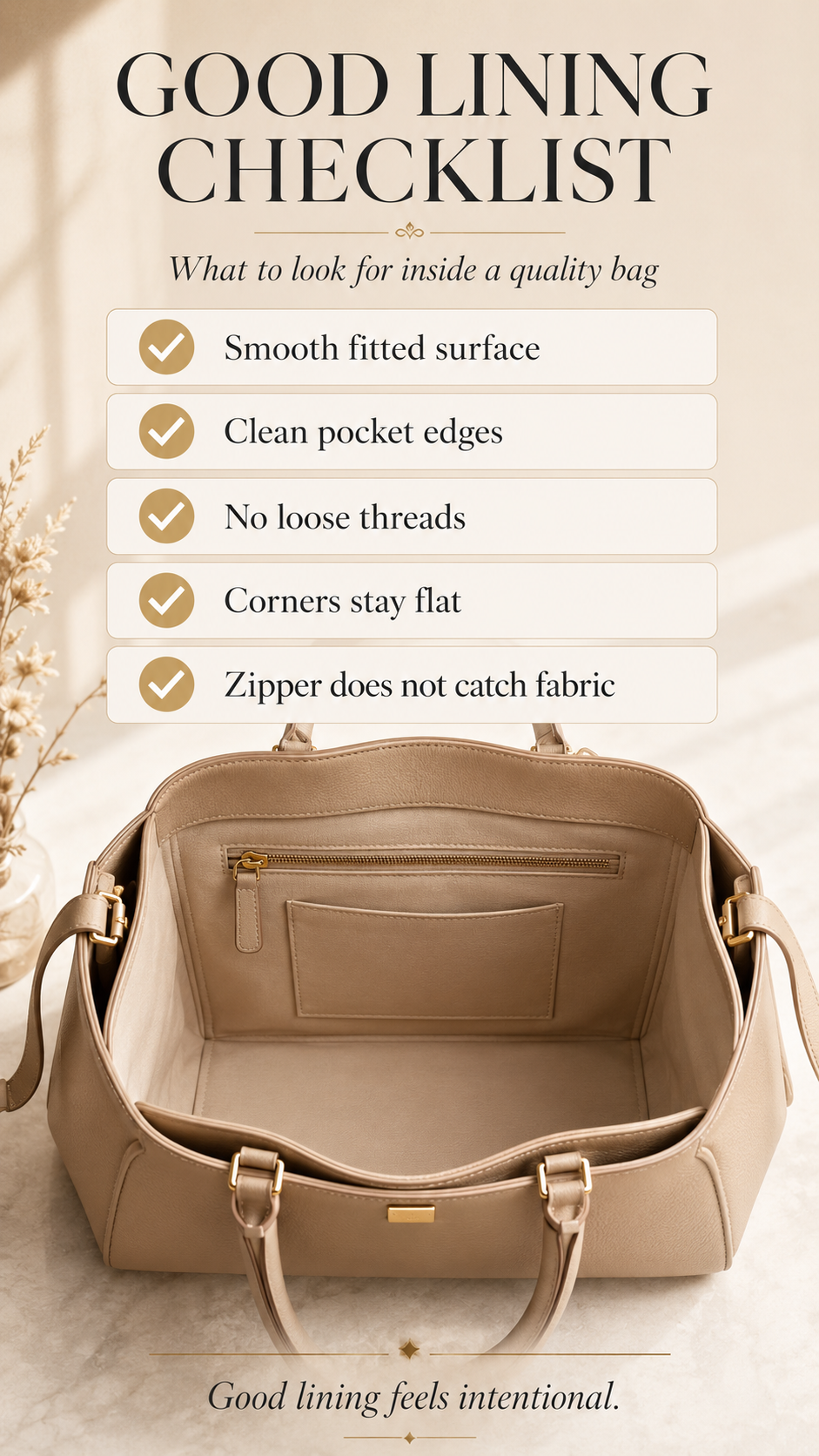
A good lining should look intentionally fitted. It does not have to be luxurious or expensive, but it should feel clean, secure, and practical. The best sign is simple: when you open the bag, the inside should look like it belongs to that exact bag shape.
- Smooth surface with no heavy sagging.
- Clean pocket edges with no loose threads.
- Bottom corners that do not trap small items underneath.
- Straight zipper pocket placement.
- No sharp hardware parts pressing through the fabric.
- No strong chemical odor from the interior.
- Interior color that helps you see your items.
- Material that matches the bag’s use case.
Red Flags in Bag Lining
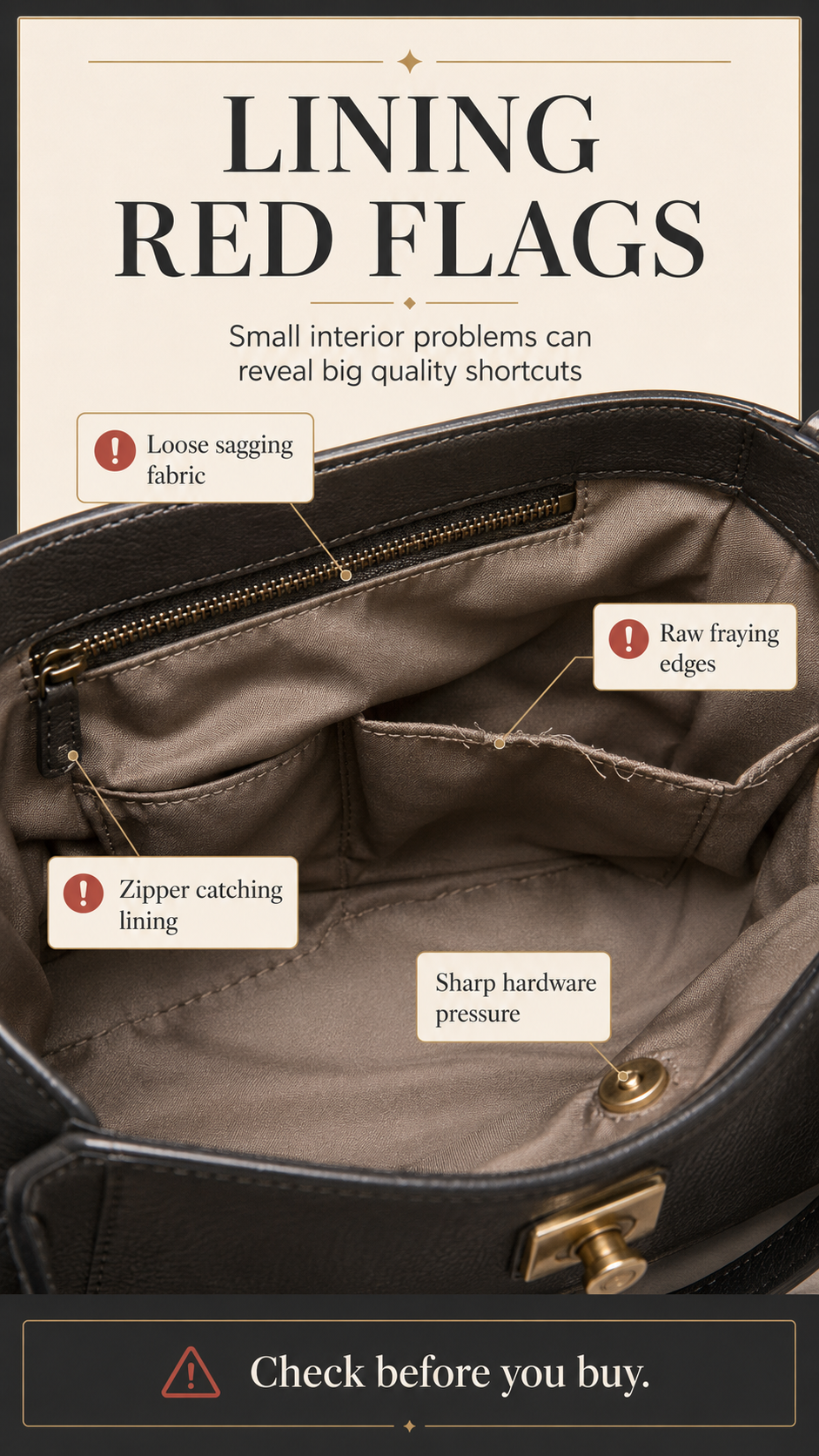
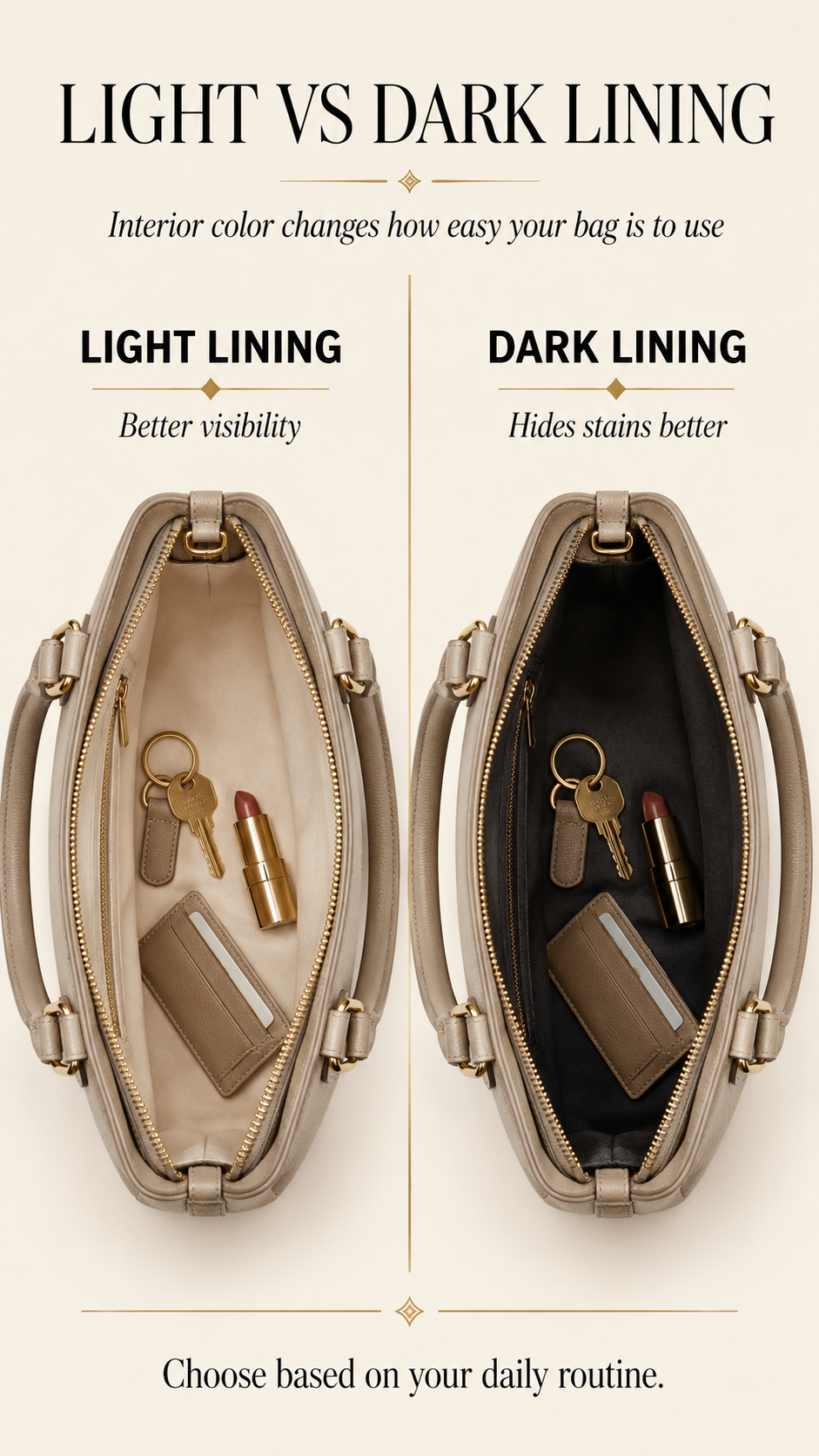
The easiest way to identify a low-grade lining is to inspect the areas most shoppers ignore: the bottom corners, the pocket interiors, the back of magnetic closures, and the feel of the fabric when you pinch it.
| Red Flag | What It May Suggest | Why It Matters |
|---|---|---|
| Loose lining that lifts like a sack | Poor fit or weak interior anchoring | Small items can slide underneath and the lining may pull at the top seam |
| Raw, fuzzy pocket edges | Rushed finishing | Edges may fray faster with keys, pens, and daily friction |
| Thin, see-through fabric | Low material strength | Hardware bumps and seam pressure may wear through faster |
| Sharp clasp parts felt through lining | Poor hardware backing or weak reinforcement | Metal edges can rub against or cut the lining over time |
| Strong chemical smell | Adhesive, coating, or storage issue | May be unpleasant and can reduce buyer confidence |
Good vs Bad Lining: Easy Comparison
You do not need to be a leather expert to compare lining quality. Use four simple checks: touch, sight, sound, and function. This method works for everyday satchels, crossbody bags, totes, hobo bags, bucket bags, and backpacks.
| Test | Good Lining | Bad Lining |
|---|---|---|
| Touch | Feels smooth, stable, and tightly woven | Feels scratchy, very thin, or paper-like |
| Sight | Looks clean, fitted, and neatly stitched | Looks wrinkled, saggy, uneven, or unfinished |
| Sound | Quiet when gently squeezed | Loud crinkling or crunchy sound |
| Function | Pockets hold shape and zippers move smoothly | Pockets stretch, zipper catches fabric, or corners trap small items |
Bag Lining by Bag Type
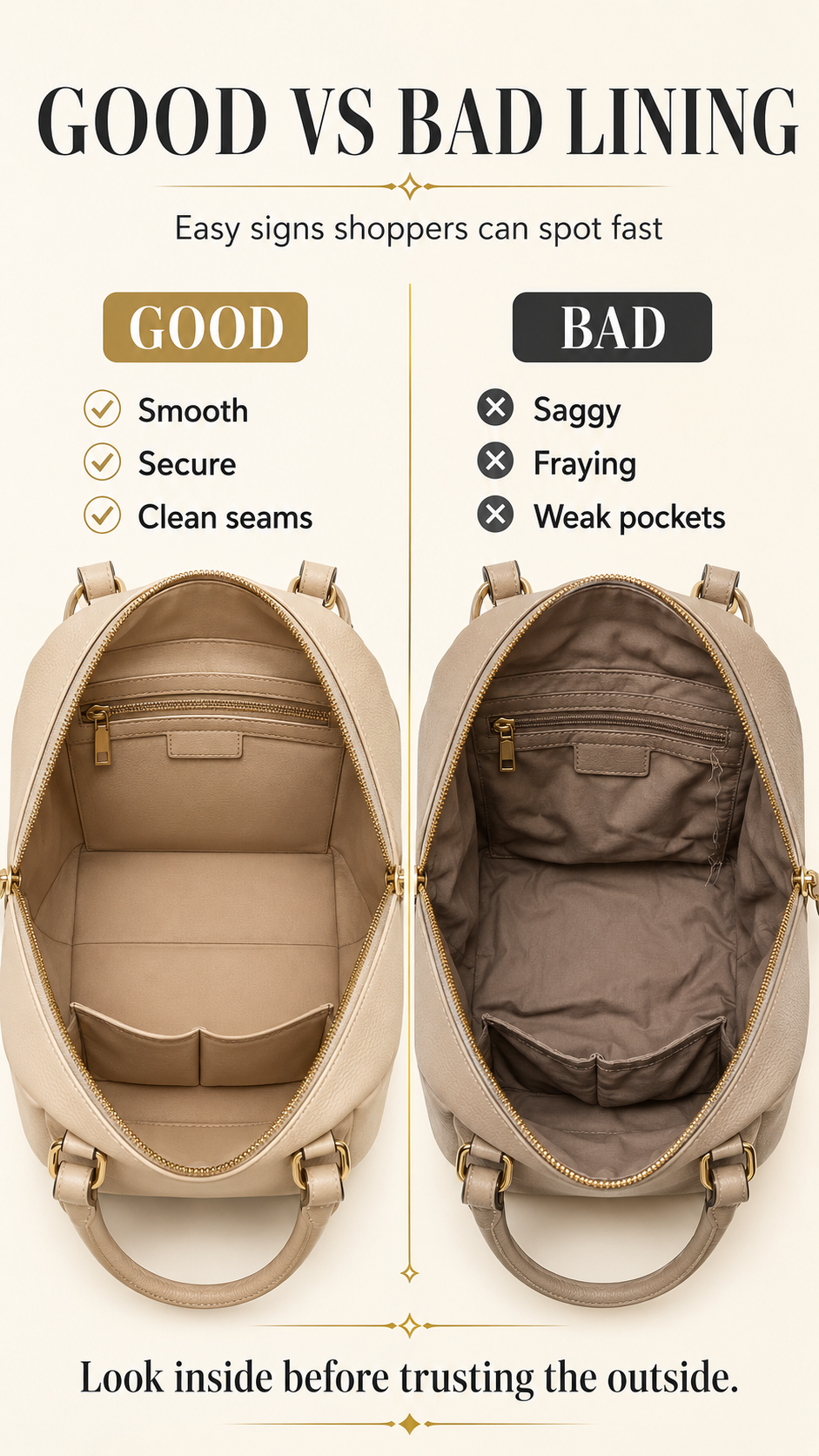
The best lining depends on the bag’s purpose. A travel backpack needs a different interior than a structured satchel or a small evening clutch. That is why shoppers should judge lining based on the actual use case, not only by whether the lining looks “luxury.”
| Bag Type | Best Lining Direction | Why |
|---|---|---|
| Structured Satchel | Cotton twill, polyester twill, jacquard, or leather-like interior | Needs a clean shape, practical pockets, and stable panels |
| Everyday Tote | Canvas, cotton duck, nylon, or sturdy polyester | Needs durability for wallets, pouches, books, and daily essentials |
| Crossbody Bag | Lightweight polyester, nylon, microfiber, or soft fabric | Should keep the bag light and easy to use |
| Hobo Bag | Soft fabric or suede-like lining | Should move with the relaxed shape without feeling stiff |
| Backpack | Nylon, polyester, ripstop, or coated synthetic fabric | Needs abrasion resistance and easier cleaning for active use |
| Evening Clutch | Grosgrain, satin-like textile, suede, or leather | Prioritizes refined feel, smooth touch, and elegant presentation |
For example, if you are comparing a polished structured satchel bag for women with a sporty adidas Defender 5 backpack, the lining expectations should not be identical. The satchel should feel refined and organized, while the backpack should feel practical and durable for active daily carry.
Why Interior Color Matters
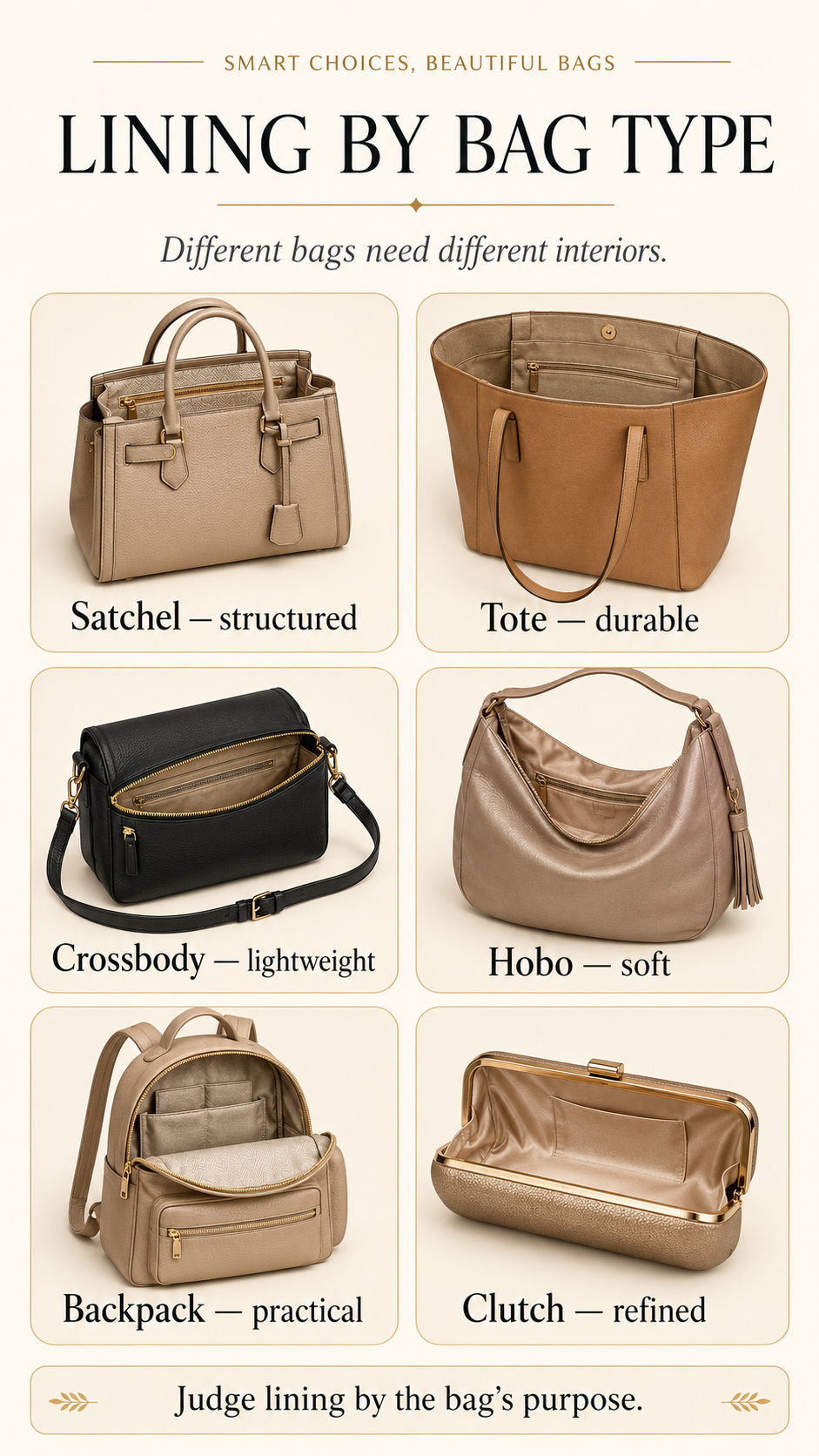
Lining color affects usability. A very dark interior can make a bag feel like a black hole, especially in larger totes or deep bucket bags. Lighter tan, beige, red, patterned, or contrast linings can make it easier to find small items such as keys, lip balm, cards, earbuds, and receipts.
That does not mean dark lining is bad. Dark lining can hide stains better, which is useful if you carry makeup, pens, snacks, or travel items. The best choice depends on whether visibility or stain-hiding matters more for your routine.
What to Check Before Buying a Bag Online
Online shoppers need to be more careful because they cannot touch the lining. Before buying, look for clear interior photos, pocket photos, zipper close-ups, and the material description. If a listing shows ten exterior shots but no interior view, that is not always proof of poor quality, but it does leave an important question unanswered.
- Does the listing show the inside of the bag?
- Is the lining material named?
- Are the pockets and zipper compartments visible?
- Do customer reviews mention “lining tore,” “inside ripped,” or “cheap lining”?
- Does the bag look empty but still hold shape?
- Is there a return policy if quality does not match expectations?
This matters for product categories like LOVEVOOK satchel bags, ALDO structured bags, and COCIFER-style satchel bags, where interior organization, zipper pockets, and compartment layout can be part of the buying decision.

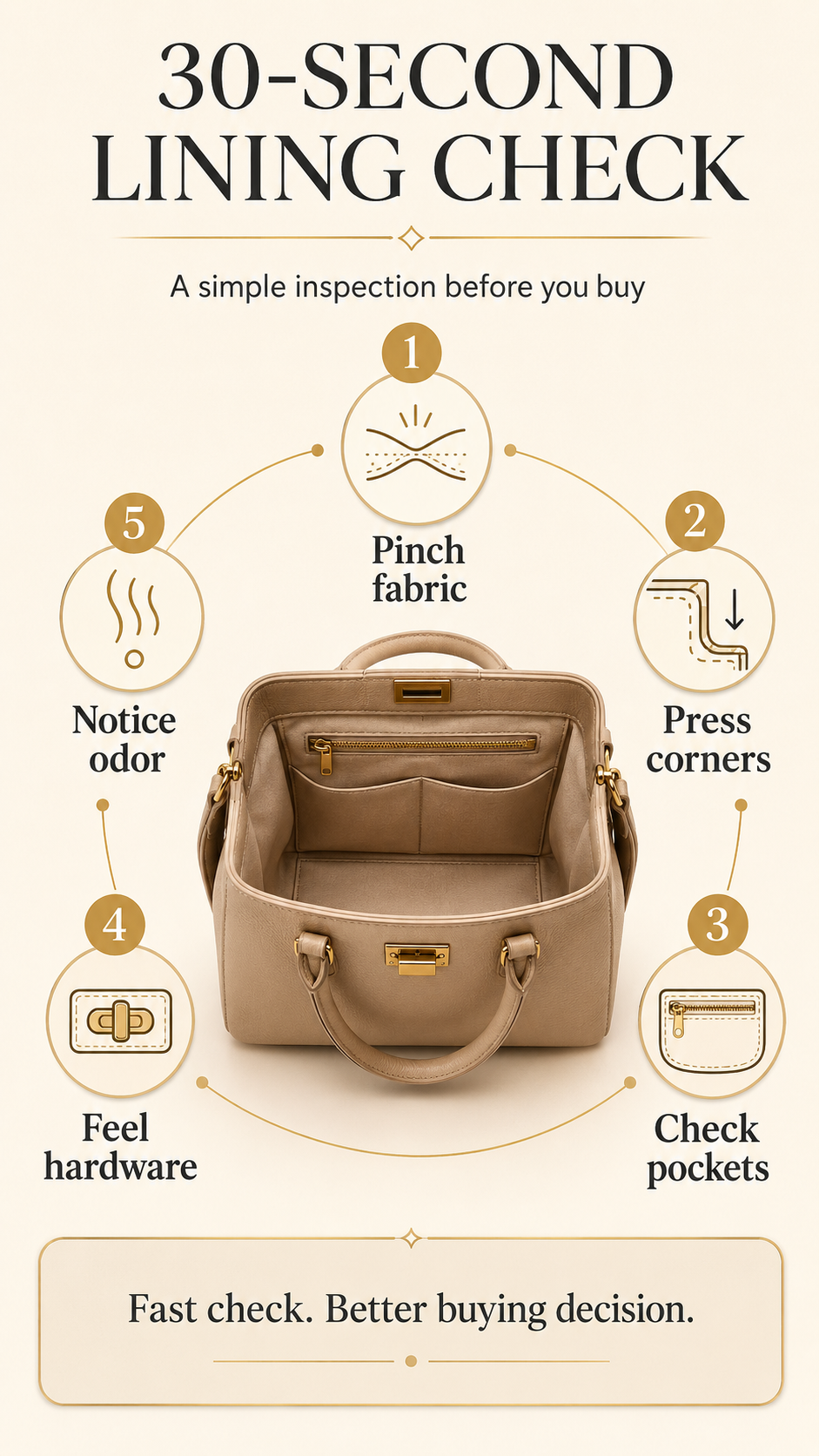
How to Inspect a Bag Lining in 30 Seconds
If you are in a store, thrift shop, outlet, or checking a bag after delivery, use this quick inspection method.
1. Pinch the lining
The material should not feel extremely thin or scratchy. It should feel stable enough for the bag’s purpose.
2. Press the bottom corners
Push your fingers into the lower corners. The lining should not create large hidden gaps where coins or small items can disappear.
3. Check pocket edges
Open the inside pocket. Look for loose threads, raw fabric, weak zipper stitching, or stretched openings.
4. Feel behind hardware
Press behind snaps, magnetic closures, and turnlocks. A good interior should not expose sharp metal pressure through thin lining.
5. Smell the inside
A mild material smell is normal in many new bags, but a harsh chemical odor can reduce buyer confidence.
How to Care for Bag Lining
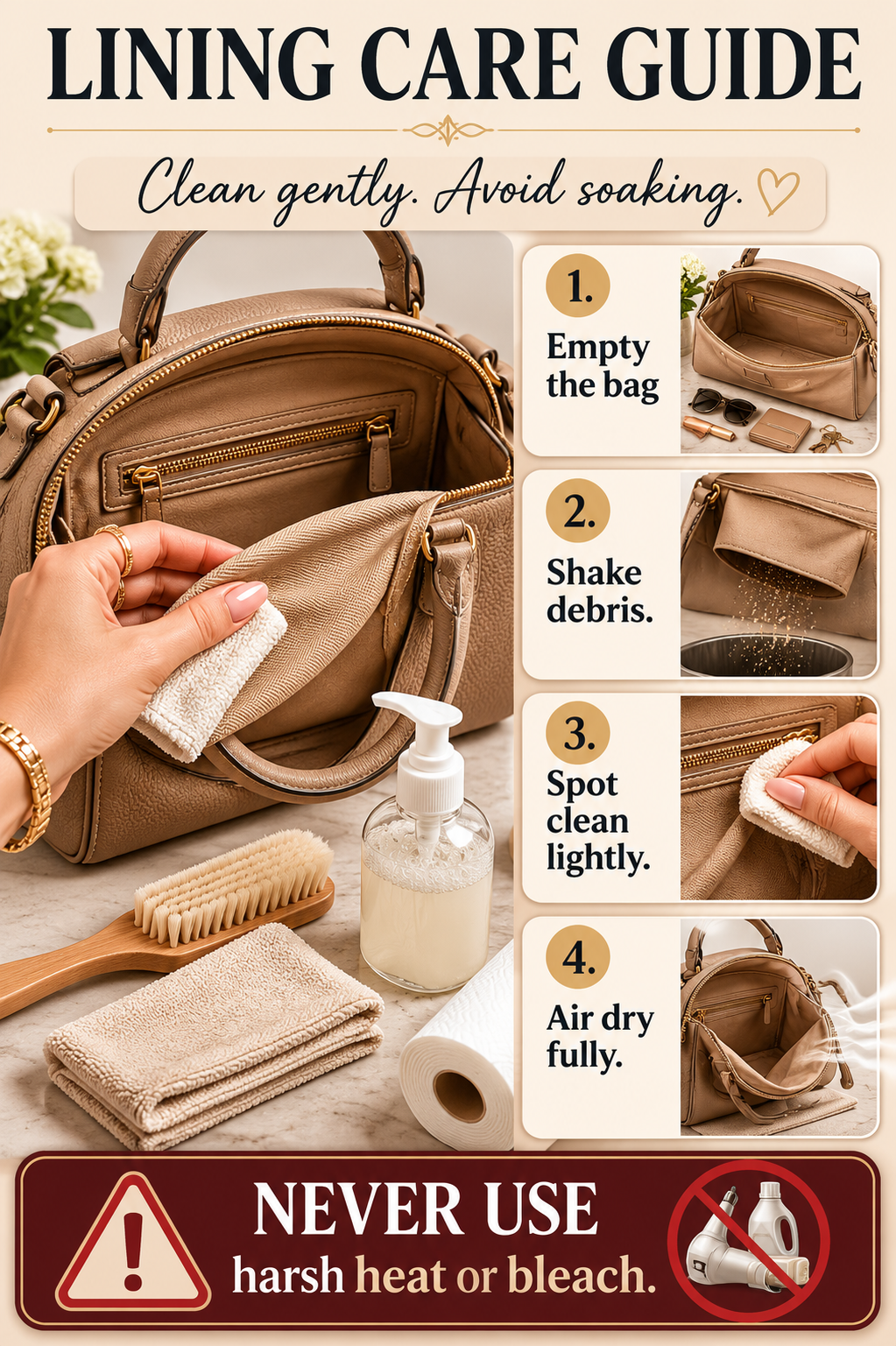
Bag lining care should be gentle. Dooney & Bourke recommends using a soft brush for surface dirt on fabric lining, then a slightly damp microfiber cloth with mild soap or detergent for stains, followed by clean-water residue removal and full air drying. SENREVE also warns shoppers not to over-saturate lining because moisture can soak through and affect the leather.
| Lining Type | Safer Care Direction | Avoid |
|---|---|---|
| Polyester / Nylon | Shake out debris, wipe gently with a barely damp cloth and mild soap if needed | Harsh chemicals, soaking, strong heat |
| Cotton / Canvas | Use lint roller, soft brush, and careful spot cleaning | Over-wetting, rubbing stains aggressively |
| Leather Lining | Use a soft dry cloth or leather-appropriate cleaner after spot testing | Baby wipes, bleach, alcohol-heavy products |
| Suede / Microsuede | Use a suede brush or dry cleaning approach first | Water saturation, oily cleaners, heavy scrubbing |
LA GLOSSÉ Review Method: How We Look at Bag Lining
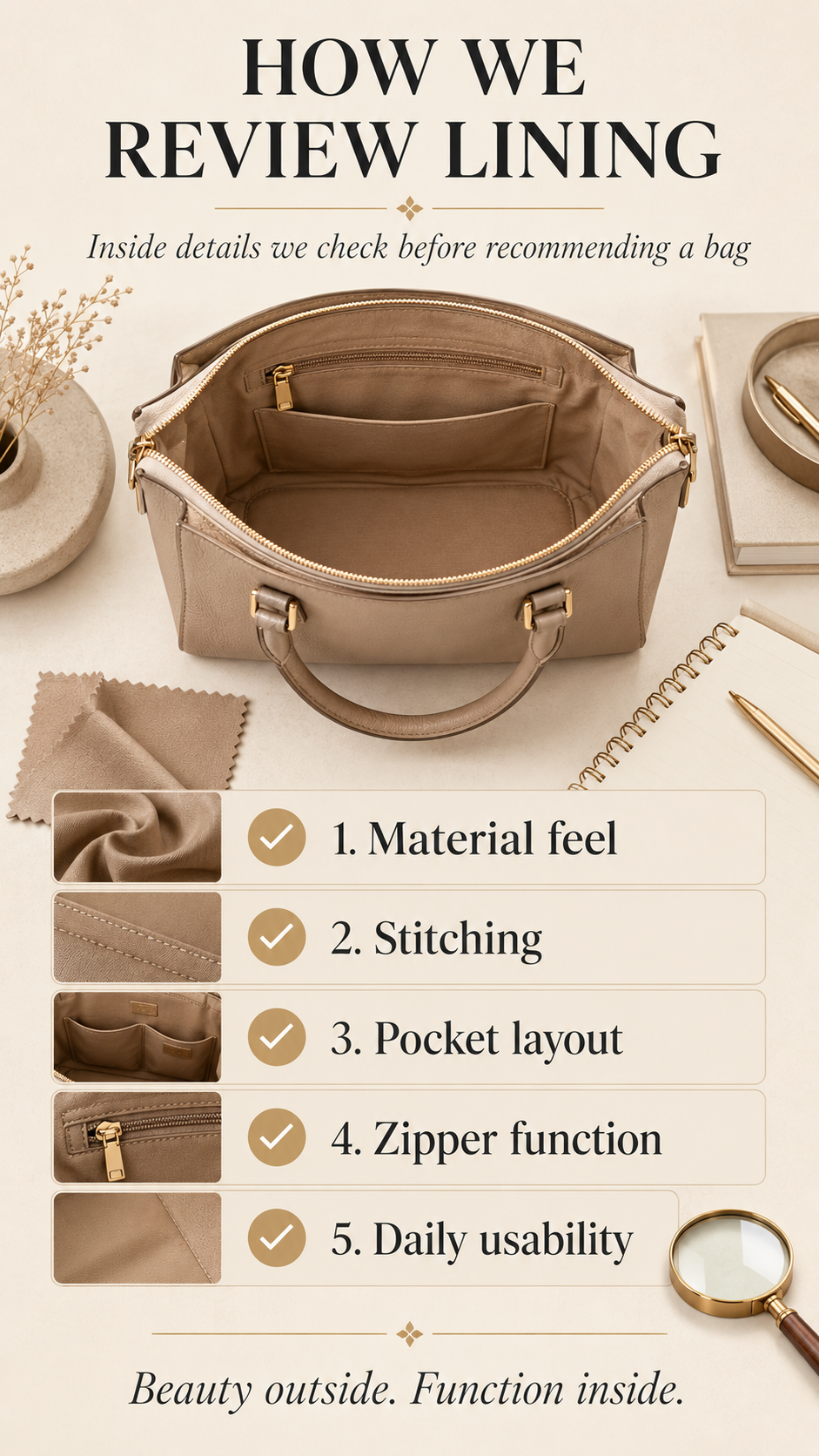
At LA GLOSSÉ, we treat lining as part of the total buying experience. A bag may look beautiful on the outside, but the inside tells shoppers how practical it may feel over time. When reviewing a bag, we look at the interior layout, lining material, pocket placement, zipper function, stitching neatness, and whether the lining matches the bag’s purpose.
For example, a triple-compartment satchel should be judged partly by how easy the compartments are to use. A bucket shoulder bag should be checked for interior visibility and reach. A compact sling bag should keep its lining lightweight so it does not reduce usable space.
Best Practical Lining Choice by Lifestyle
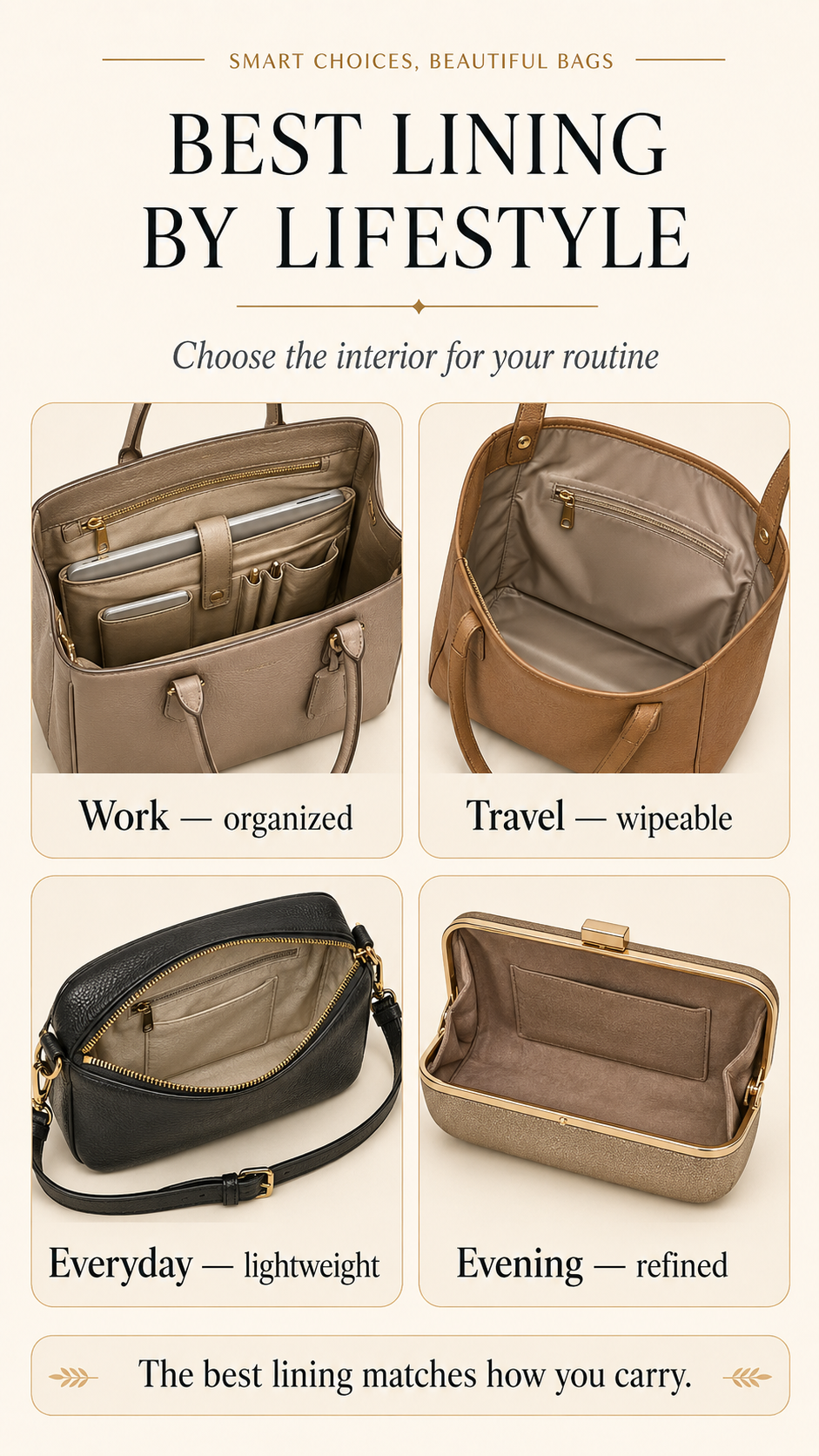
If you carry makeup, choose an interior that is easier to wipe. If you carry tech, choose smoother fabric and protected compartments. If you want a refined fashion look, suede-like or jacquard lining may feel more elegant. If you want a sturdy daily bag, canvas or tightly woven synthetic lining can make more sense.
| Your Lifestyle | Better Lining Direction | Reason |
|---|---|---|
| Office and work carry | Smooth fabric, structured compartments, mid-to-dark interior | Looks polished and handles daily essentials better |
| Travel and errands | Nylon, polyester, ripstop, or coated fabric | Easy cleaning and practical durability matter most |
| Minimal everyday carry | Lightweight polyester, microfiber, or soft cotton | Keeps small bags from feeling bulky |
| Dressy occasions | Suede-like, leather, grosgrain, or satin-like textile | Prioritizes soft feel and elegant presentation |
If you are choosing by color and outfit versatility too, pair this guide with our best color purse guide and the brown purse vs black purse styling guide.
Bag Lining FAQ
Is polyester lining bad?
No. Polyester lining is not automatically bad. It can be lightweight, wrinkle-resistant, and practical. The issue is quality. A dense, smooth polyester lining can be useful, while a very thin, noisy, scratchy polyester lining may feel cheap.
Is nylon lining good for handbags?
Nylon can be a good choice for travel bags, backpacks, utility crossbodies, and sporty bags because it is often strong and practical. For very dressy handbags, some shoppers may prefer a softer or more refined lining.
Should a luxury bag always have leather lining?
No. Some luxury or premium bags use fabric linings to reduce weight, improve flexibility, or create a specific visual identity. Leather lining can feel beautiful, but it adds cost and weight.
What is the easiest lining to clean?
Many synthetic linings such as polyester or nylon are easier to wipe than absorbent cotton or suede. Always test gently and avoid soaking the bag.
What is the biggest red flag in bag lining?
A loose, sagging lining with raw pocket edges and thin fabric is one of the clearest warning signs. It suggests the interior may not hold up well to daily friction.
Should I avoid a bag if the listing has no interior photos?
Not always, but it is a caution sign. If the interior matters to you, look for customer review photos, product videos, or a return policy before buying.
Does lining affect bag shape?
It can. Lining, interfacing, and internal reinforcement can all help a bag feel more finished and structured. However, shape also depends on the outer material, pattern, seams, and base construction.
Can torn bag lining be repaired?
Often yes. Small tears may be patched or stitched, while badly damaged linings may need professional replacement. If the bag is expensive or sentimental, a leather repair specialist is safer.
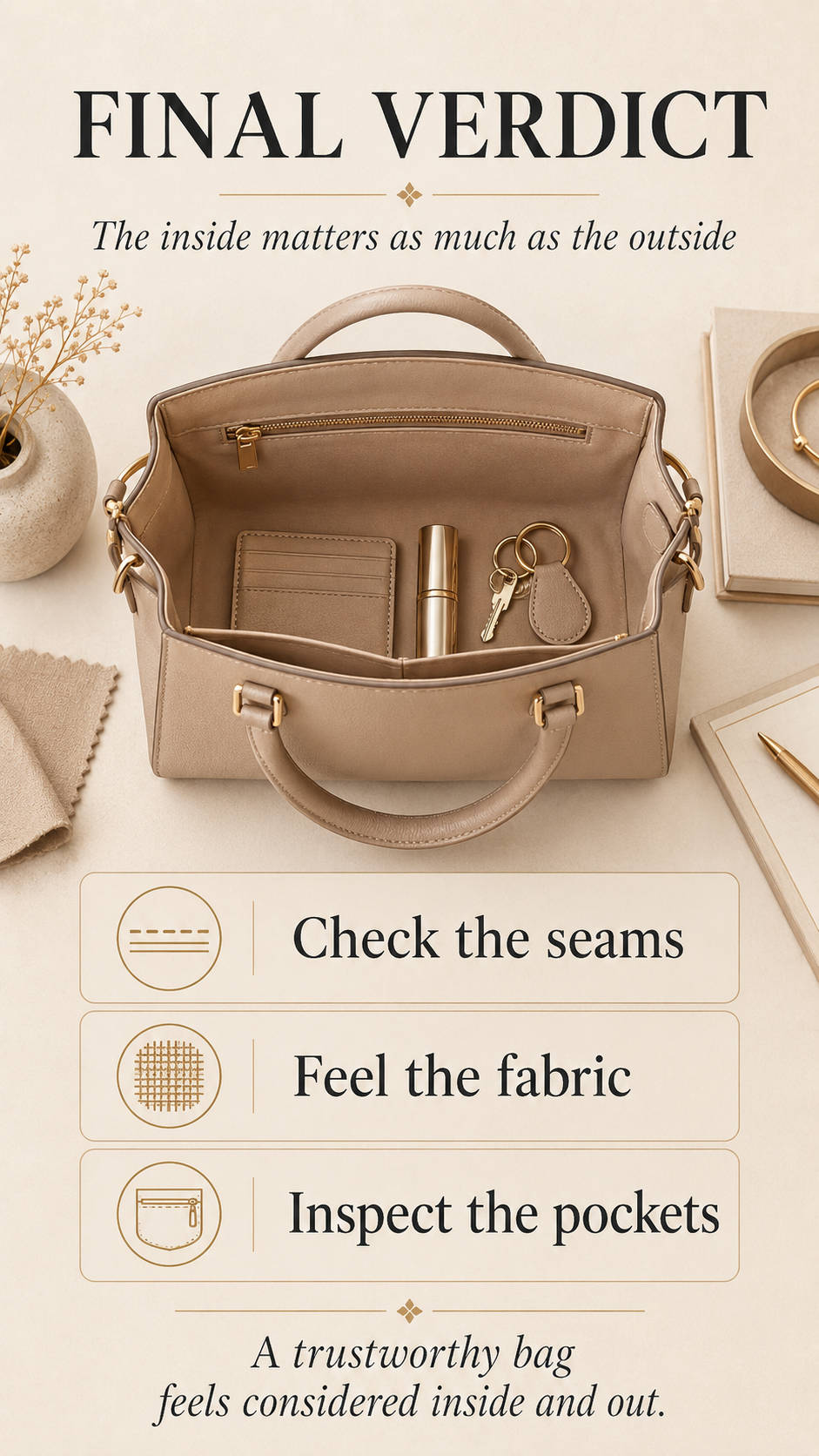
Final Verdict
Bag lining is one of the most overlooked parts of a ladies’ handbag, but it is also one of the most useful quality signals. A good lining protects the interior, supports pockets, improves usability, and gives the bag a more finished feel. A poor lining can make a pretty bag frustrating to use.
Before buying your next bag, open it, touch the lining, check the pocket seams, press the corners, and look for interior photos online. The outside may catch your eye first, but the inside often tells you whether the bag was built with real attention to detail.